


85gsm, 105gsm
JLON
130±10
White with Red Tracer Line/Green
100m, 200m
Peel ply is an essential auxiliary material for composite molding, placed between mold and product blank to isolate resin and prevent mold adhesion. It features soft texture, excellent absorption and ductility, suitable for complex curved and special-shaped products. It ensures smooth demolding without surface damage, guarantees flatness and smoothness of finished products, and is widely used in aerospace, shipbuilding, wind turbine blades and high-end carbon fiber products.
JLON supplies peel ply fabrics for composite manufacturing, including polyester, PA6 nylon, PA66 nylon and adhesive-backed peel ply.
Our peel ply is designed to provide reliable release performance during composite molding and create a controlled surface texture after removal. Available in different materials, weights, colors and temperature ratings, it is suitable for vacuum infusion, vacuum bagging, pultrusion and other composite manufacturing processes.
This product features high-temperature and corrosion resistance and is widely used in the molding processes of composite materials, such as pultruded carbon plates, pultruded fiberglass (FRP), aircraft components, wind turbine blades, and boat hulls.

• Reliable Release Performance: Allows removal from cured composite laminates without damaging the surface when correctly selected and processed.
• Temperature Resistance: Polyester and nylon options for different curing temperatures.
• Good Conformability: Flexible woven fabric suitable for curved and complex composite surfaces.
• Surface Preparation: Creates a textured laminate surface that may support subsequent bonding or coating, subject to process validation.
• Multiple Options: Available in white with red tracer lines, green dyed and other woven constructions.
• Custom Supply: Different weights, widths, roll lengths and cutting options available.
| Property | Specification |
| Product | Peel Ply |
| Material | Polyester, PA6 Nylon, PA66 Nylon |
| Basis Weight | 85 g/m², 105 g/m² |
| Standard Width | 1.5 m, 1.8 m |
| Roll Length | 100 m, 200 m |
| Temperature Resistance | Up to 230°C, depending on material |
| Color | White with Red Tracer, Green |
| Adhesive Option | Non-Adhesive / Adhesive-Backed |
| Customization | Custom Cutting and Roll Sizes |
Specifications vary by product grade. Contact JLON for the appropriate technical datasheet.
1,Polyester peel ply: Temperature resistance 150-180℃, suitable for conventional medium and low temperature curing processes, high cost performance and universal application.
2,PA6 nylon peel ply: Temperature resistance 180-200℃, suitable for medium and high temperature curing, with better toughness and tightness than polyester type.
3,PA66 nylon peel ply: Temperature resistance 210-230℃, excellent high-temperature stability, universal for high-end processes.
A commonly used peel ply construction featuring a white woven fabric with red tracer lines for easy identification during composite manufacturing.
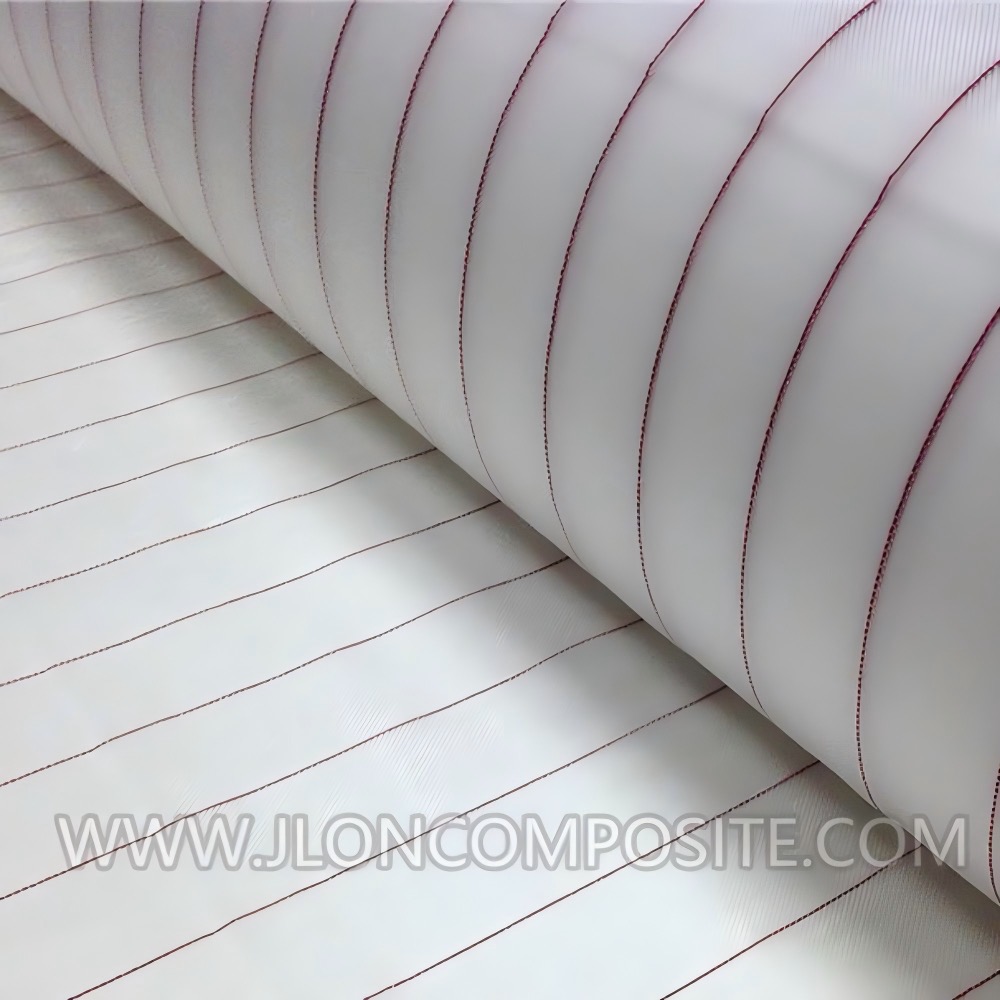
| Item | Value | Standard | |
|---|---|---|---|
| Color | White with Red Tracer | PANTONE/11-4001TPG/18-1547TPG | |
| Density | (18*16)±5% | GB/T 4669-2008 | |
| Weight(g/m2) | 85±5 | GB/T 4669-2008 | |
| Tensile strength(N) | Warp | ≧1200 | GB/T 3923.1-2013 |
| Weft | ≧1000 | GB/T 3923.1-2013 | |
| Red Tracer distance(CM) | 3.0 | GB/T4669-2009 | |
| Thickness | 130±10 | GB/T 3820-1997 | |
Green peel ply produced using a dyeing process, available for applications requiring colored fabric identification.
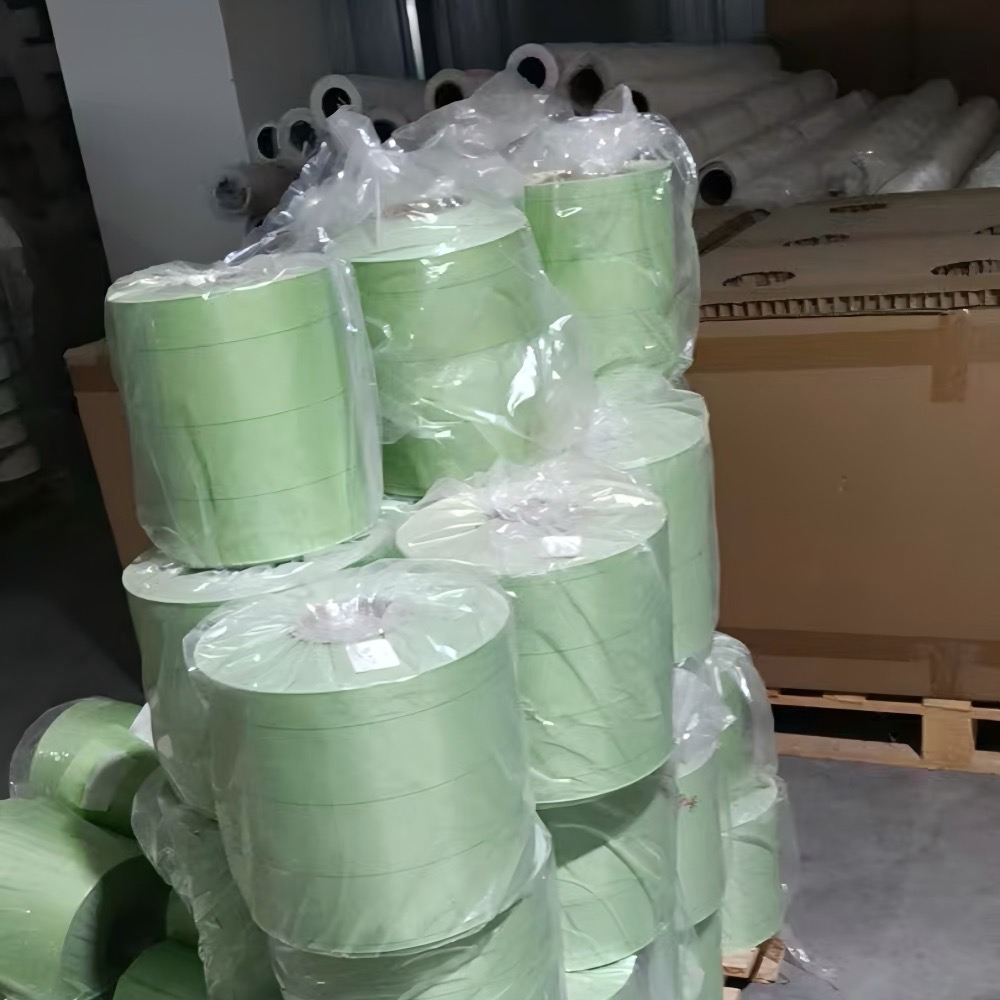
Nylon peel ply featuring a green woven construction. Material and performance specifications are available upon request.
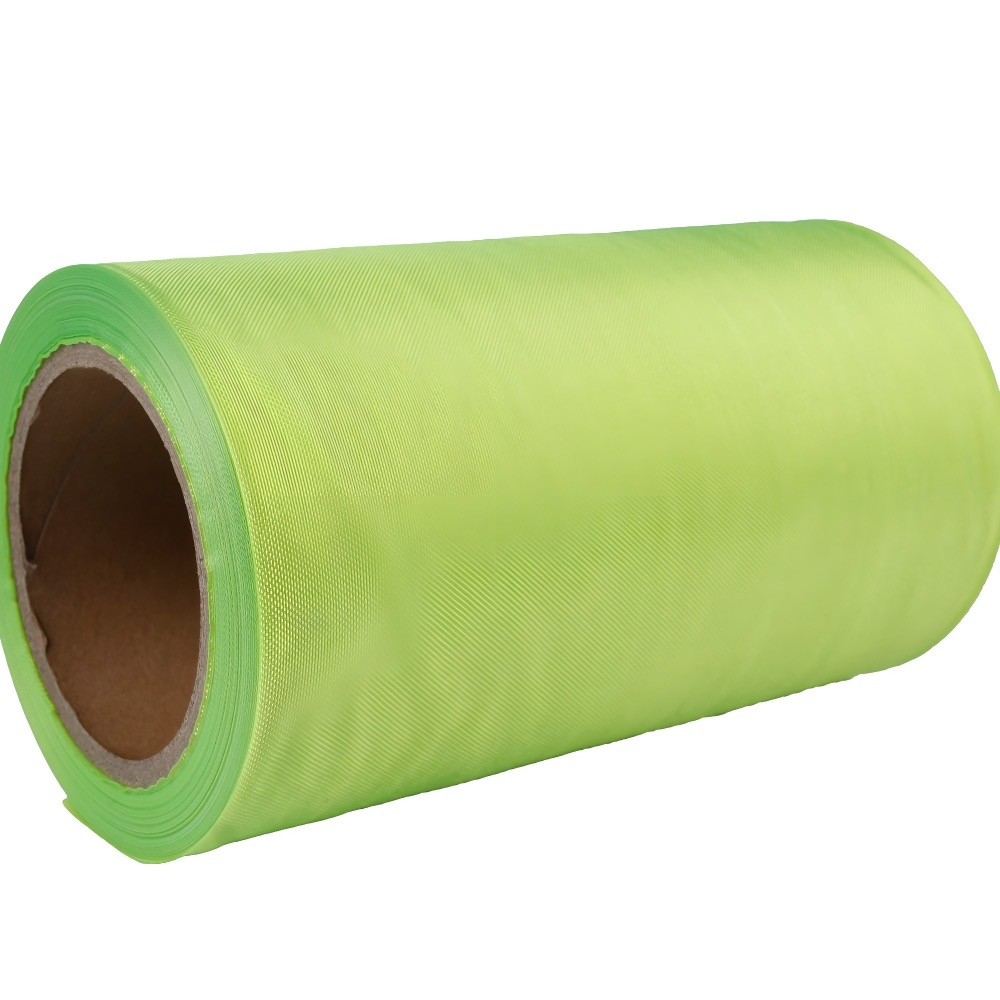
Non-Adhesive Peel Ply
Standard peel ply without an adhesive layer, widely used in vacuum infusion, vacuum bagging, pultrusion and general composite molding.
Adhesive-Backed Peel Ply
Custom peel ply incorporating an adhesive layer to help maintain material positioning during layup. Suitable for selected applications involving complex surfaces or additional positioning requirements.
Adhesive compatibility, residue behavior and curing temperature must be verified for the intended process.
PAS105RS Adhesive-Backed Nylon Peel Ply
PAS105RS is a high-strength PA66 nylon peel ply with a plain weave construction and red tracer lines. The fabric is washed and heat-set to support clean surface performance and consistent release behavior.
It is designed for selected vacuum infusion and pultrusion processes where additional material positioning is required.
| Property | Specification |
|---|---|
| Base Material | Nylon 66 |
| Weave | Plain Weave |
| Fabric Weight | 105 ± 5 g/m² |
| Fabric Thickness | 0.190 ± 0.015 mm |
| Total Weight | 290 ± 5 g/m² |
| Total Thickness | 285 ± 10 μm |
| Maximum Width | 1.8 m |
| Fabric Heat Resistance | 230°C |
| Warp Density | 225 ± 10 yarns/10 cm |
| Weft Density | 200 ± 10 yarns/10 cm |
| Warp Tensile Strength | >1500 N |
| Weft Tensile Strength | >1200 N |
| Oil Content | ≤0.5% |
| Adhesive Thickness | 0.08 mm |
| Adhesive Type | Modified Acrylic |
| Adhesive Temperature Resistance | 120°C |
| Available Length | 50–1000 m |
Important: The PA66 fabric has a stated heat resistance of 230°C, while the adhesive system is rated at 120°C. For adhesive-backed PAS105RS, the complete product must be evaluated against the actual curing temperature and process conditions.
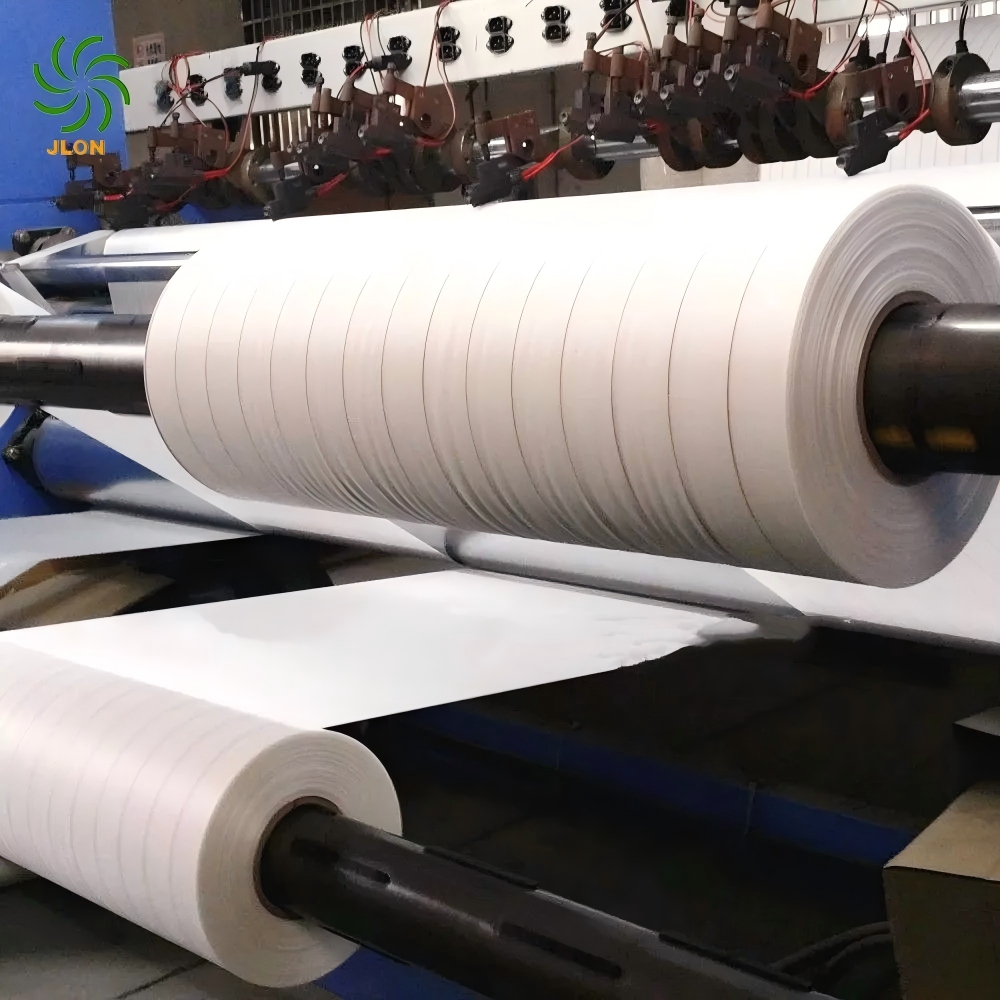
Selecting the appropriate peel ply depends on the curing temperature, manufacturing process, fabric specifications and functional requirements.
| Selection Factor | What to Consider |
|---|---|
| Curing Temperature | Select polyester, PA6 or PA66 based on the required temperature and curing duration. |
| Manufacturing Process | Confirm whether the application involves vacuum infusion, vacuum bagging, pultrusion or autoclave curing. |
| Fabric Specifications | Check basis weight, thickness, width and roll length |
| Surface Requirements | Consider the required surface texture, release performance and subsequent bonding or coating processes. |
| Special Requirements | Confirm whether colored, adhesive-backed or custom-cut peel ply is needed. |
For vacuum bagging processes, the temperature ratings of all consumables, including vacuum bagging film, sealant tape and peel ply, should be checked separately.
1. What is peel ply used for in composite manufacturing?
Peel ply is a removable woven fabric placed on the surface of a composite laminate during manufacturing. After curing, it is peeled away to expose a controlled surface texture and assist with subsequent bonding, coating or other finishing operations.
2. What is the difference between nylon peel ply and polyester peel ply?
The main differences are material composition and temperature resistance. Polyester peel ply is commonly used for conventional curing processes, while nylon peel ply, including PA6 and PA66 grades, offers options for higher-temperature applications.
3. What is the maximum temperature resistance of peel ply?
JLON offers peel ply material grades with stated temperature resistance ranging from 150°C to 230°C. The actual temperature limit depends on the fabric material, construction and curing conditions. Adhesive-backed grades may have lower operating limits due to the adhesive system.
4. Is peel ply suitable for vacuum infusion?
Yes. Suitable peel ply grades are commonly used in vacuum infusion processes for fiberglass and carbon fiber composite manufacturing. The specific fabric should be selected according to resin compatibility, processing conditions and surface requirements.
5. What is the difference between 85 g/m² and 105 g/m² peel ply?
The primary difference is fabric basis weight. JLON offers 85 g/m² as a standard option and 105 g/m² for selected customized applications. Fabric thickness, strength and other performance characteristics depend on the specific product construction.
6. What is adhesive-backed peel ply?
Adhesive-backed peel ply includes an adhesive layer designed to help position the fabric during composite layup. It may be useful for complex surfaces or processes where material movement needs to be minimized.
7. Does peel ply leave residue on composite surfaces?
Residue behavior depends on the peel ply material, fabric treatment, adhesive system, resin and curing conditions. For critical secondary bonding or coating applications, surface cleanliness and compatibility should be validated before production.
8. Can peel ply be used for carbon fiber composites?
Yes. Peel ply is used in carbon fiber composite manufacturing, including selected pultrusion, vacuum bagging and other laminate processing applications.
9. Can JLON supply customized peel ply sizes?
Yes. JLON offers standard widths of 1.5 m and 1.8 m, with standard roll lengths of 100 m and 200 m. Custom cutting and roll specifications are available upon request.
10. How do I select peel ply for high-temperature curing?
Confirm the maximum curing temperature, holding time, resin system and manufacturing process. Select a suitable fabric grade and verify the temperature resistance of the complete product, especially when an adhesive layer is present.


