Views: 0 Author: Site Editor Publish Time: 2026-10-16 Origin: Site
Table of Contents
Peel ply is extensively utilized in composite fabrication techniques, notably vacuum infusion, vacuum bagging, and pultrusion, vacuum bagging, and pultrusion, vacuum bagging and pultrusion. It is a removable woven fabric applied to composite laminates during processing and peeled away after curing to leave a controlled surface texture.
Nylon and polyester are two common peel ply materials. Despite serving the same fundamental purpose, different peel plies offer varying levels of heat resistance and curing versatility. By understanding these nuances, composite producers can optimize their material selection to enhance both efficiency and final product quality.
Composite manufacturers are better positioned to specify the correct peel ply for their process once these distinctions are clearly understood.
The main difference between nylon and polyester peel ply is the base material and its temperature resistance.
Polyester peel ply is commonly used for conventional composite curing processes, while nylon peel ply offers higher-temperature options, including PA6 and PA66 grades.
Polyester peel ply is a woven fabric used in general composite manufacturing.
JLON offers polyester peel ply with a stated temperature resistance of 150–180°C, depending on the product grade.
It is suitable for conventional low- and medium-temperature curing processes, subject to verification of the actual curing conditions.
Nylon peel ply is available in different polyamide materials, including PA6 and PA66.
JLON offers two nylon peel ply options:
• PA6 Nylon Peel Ply: Stated temperature resistance of 180–200°C.
• PA66 Nylon Peel Ply: Stated temperature resistance of 210–230°C.
These materials provide options for composite processes requiring higher curing temperatures.
Actual temperature suitability depends on the specific product grade, curing duration and processing conditions.
The following table summarizes the main differences between the peel ply materials supplied by JLON.
Property | Polyester Peel Ply | PA6 Nylon Peel Ply | PA66 Nylon Peel Ply |
Base Material | Polyester | Polyamide 6 | Polyamide 66 |
Stated Temperature Resistance | 150–180°C | 180–200°C | 210–230°C |
Typical Curing Conditions | Low to Medium Temperature | Medium to High Temperature | High Temperature |
Composite Manufacturing | Suitable | Suitable | Suitable |
Available Options | Subject to Grade | Subject to Grade | Subject to Grade |
Cure temperature ranks among the key criteria when choosing peel ply.
The fabric must be compatible with the maximum temperature reached during the manufacturing process, including the required holding time.
For conventional low- and medium-temperature curing processes, polyester peel ply may be a suitable option.
JLON's polyester peel ply grades have stated temperature resistance ranging from 150°C to 180°C.
The actual curing temperature and duration should be checked against the selected product specifications.
For applications requiring higher processing temperatures, nylon peel ply may be considered.
PA6 and PA66 grades provide different temperature resistance options, allowing manufacturers to select a fabric according to their processing requirements.
For example, JLON offers PA66 nylon peel ply with a stated fabric temperature resistance of up to 230°C.
This rating applies to the specified fabric grade and does not automatically apply to adhesive-backed constructions or other components used in the same process.
Both nylon and polyester peel ply can be considered for composite manufacturing processes, provided the selected fabric is compatible with the resin system and processing conditions.
Vacuum infusion is widely used in the manufacturing of fiberglass and carbon fiber composite components.
Applied to the laminate before curing and withdrawn post-cure, peel ply leaves behind a mechanically keyed surface suited to follow-up treatment.
When selecting peel ply for vacuum infusion, manufacturers should consider:
• Resin compatibility
• Curing temperature and duration
• Fabric weight and thickness
• Release performance
• Surface preparation requirements
Peel ply can also be used in compatible pultrusion processes for carbon fiber plates and fiberglass profiles.
Material selection should consider processing temperature, fabric strength, release characteristics and the required surface finish.
JLON supplies peel ply options for pultruded carbon fiber and FRP products, including nylon-based constructions.
Both nylon and polyester peel ply are used to create a controlled surface texture after removal from cured composite laminates.
However, surface quality depends on more than the base fabric material.
Important factors include:
• Fabric weave and construction
• Resin system
• Curing conditions
• Surface contamination
• Peel ply removal conditions
A higher temperature rating does not necessarily mean better surface preparation performance.
For applications requiring secondary bonding or coating, manufacturers should verify surface cleanliness and bonding suitability through process-specific testing.
The appropriate material depends on the actual manufacturing requirements.
Identify the maximum curing temperature and holding time.
Compare these conditions with the stated temperature resistance of the available polyester, PA6 and PA66 peel ply grades.
Confirm whether the peel ply will be used in vacuum infusion, vacuum bagging, pultrusion or another composite manufacturing process.
Different processes may require different fabric constructions and performance characteristics.
JLON offers peel ply with the following standard specifications:
Specification | Available Options |
Basis Weight | 85 g/m², 105 g/m² |
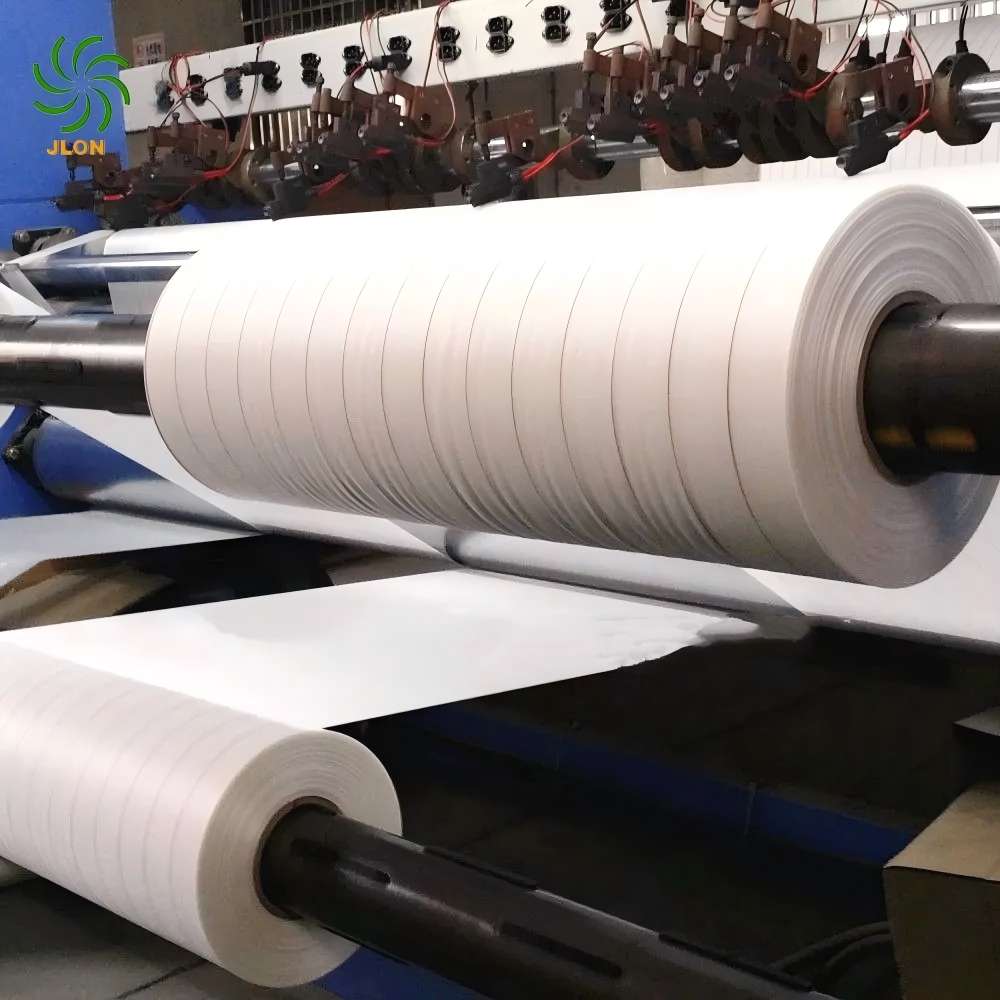
Width | 1.5 m, 1.8 m |
Roll Length | 100 m, 200 m |
Material | Polyester, PA6, PA66 |
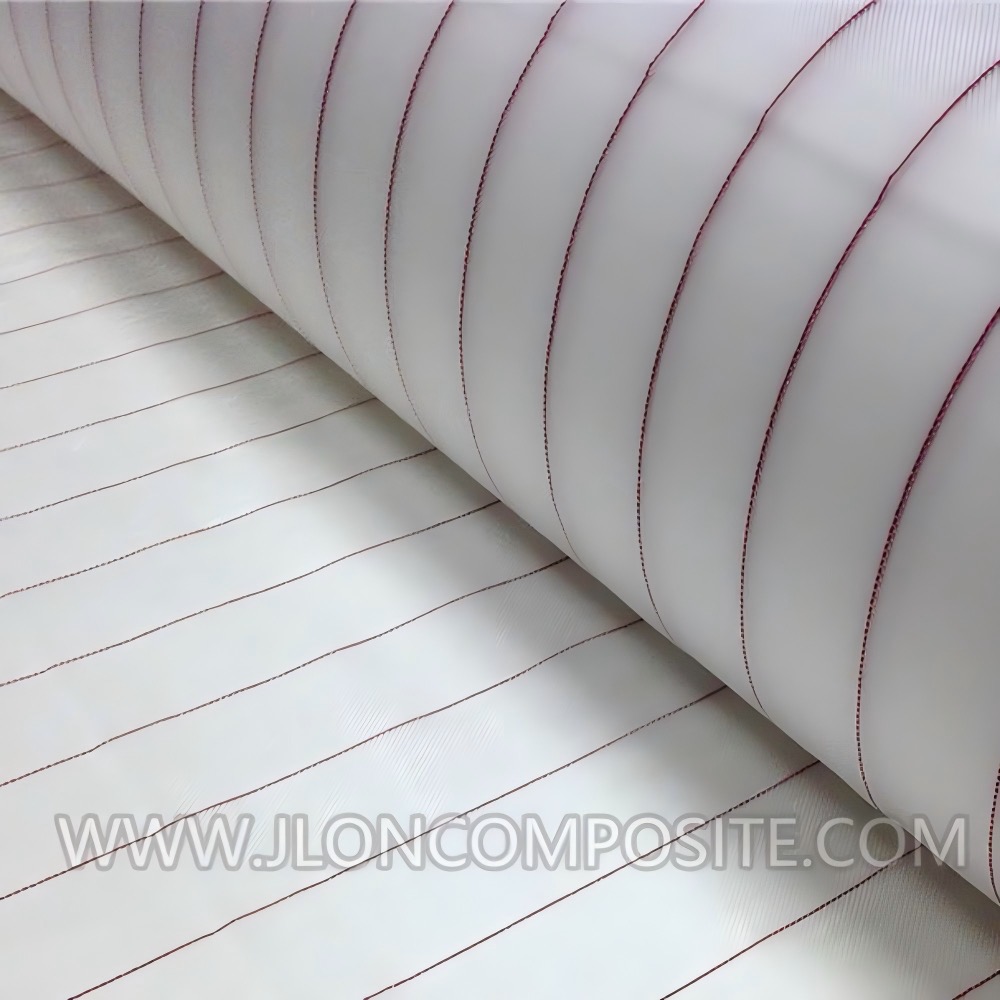
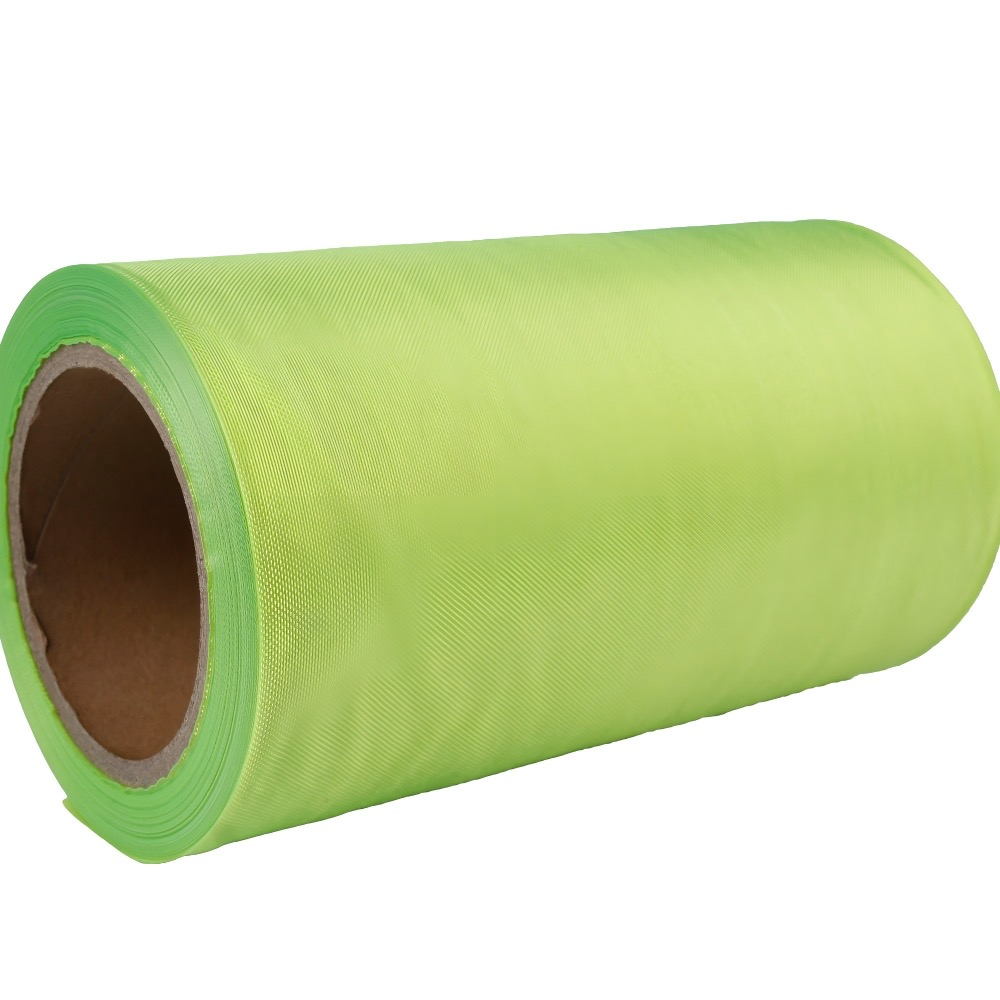
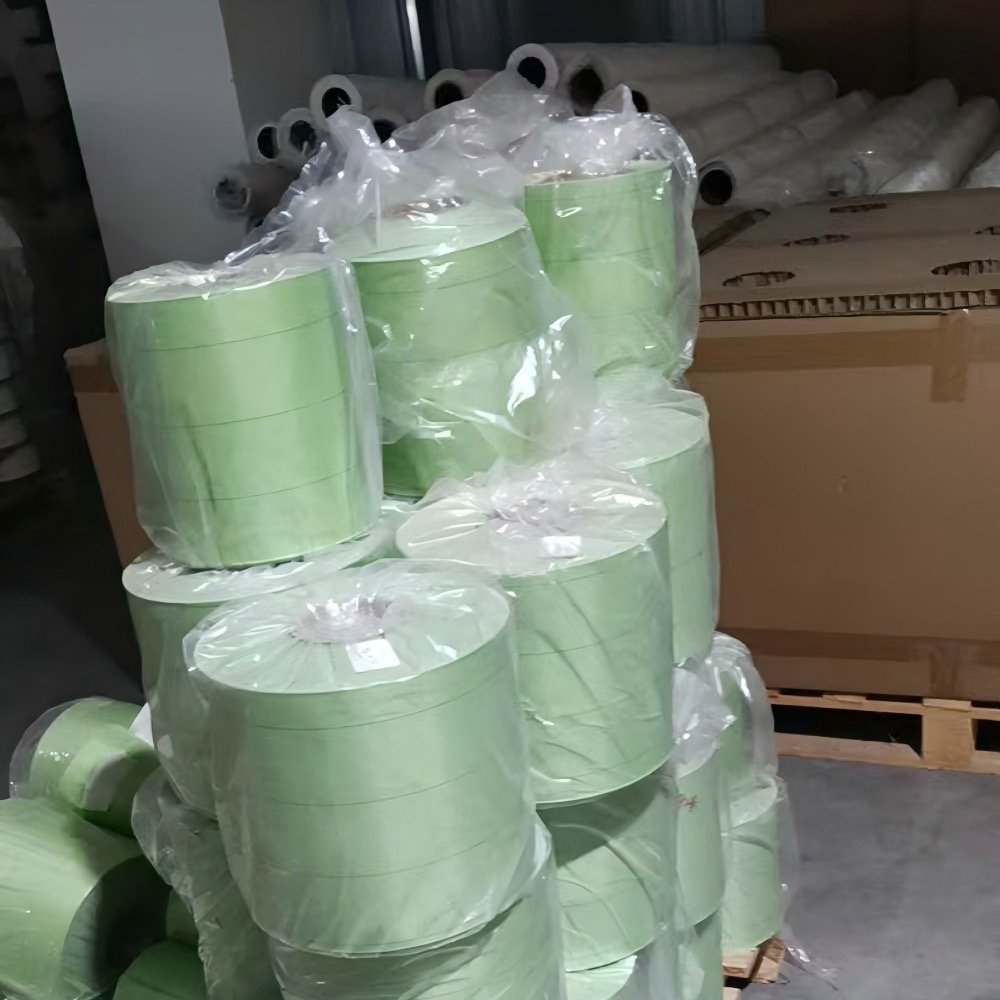
Color | White with Red Tracer Lines, Green |
Customization | Custom Cutting Available |
Availability of individual specifications depends on the selected product grade.
Some applications may require colored peel ply or adhesive-backed constructions.
For example, JLON offers PAS105RS adhesive-backed PA66 peel ply.
Although its PA66 fabric has a stated heat resistance of 230°C, the adhesive system has a separate temperature rating of 120°C.
Therefore, the temperature compatibility of the complete adhesive-backed product must be confirmed before use.
Is nylon peel ply better than polyester peel ply?
Not necessarily. Nylon peel ply provides higher-temperature options, while polyester peel ply can be suitable for conventional curing processes. The best choice depends on the curing conditions and application requirements.
Is polyester peel ply compatible with vacuum infusion?
Yes. Qualified polyester peel ply grades are suitable for vacuum infusion applications, provided the fabric demonstrates compatibility with both the resin system and the curing parameters.
What is the difference between PA6 and PA66 peel ply?
PA6 and PA66 are different nylon materials. According to JLON's supplied product information, PA6 peel ply has a stated temperature resistance of 180–200°C, while PA66 peel ply is rated at 210–230°C, depending on the grade.
Does peel ply eliminate the need for surface preparation before bonding?
No. Peel ply removal can provide a textured surface, but additional cleaning or surface treatment may still be required. Bonding suitability should be verified for the specific resin, adhesive and manufacturing process.
What peel ply weights are available?
JLON offers standard 85 g/m² peel ply and selected 105 g/m² options. We can usually tweak the specs to fit your needs, as long as the material and how it's made make it possible.
Choosing between nylon and polyester peel ply starts with understanding your curing temperature, manufacturing process and surface requirements.
JLON supplies polyester, PA6 nylon, PA66 nylon and selected adhesive-backed peel ply for composite manufacturing.
Explore our Peel Ply Fabric product range for available materials, specifications and customization options.
Contact JLON with your curing temperature, resin system, required width and quantity to discuss suitable peel ply options.