
Views: 0 Author: Site Editor Publish Time: 2026-05-29 Origin: Site
In modern composite manufacturing, resin flow control is one of the most critical factors affecting laminate quality, infusion efficiency, and overall production stability. A reliable resin distribution medium can significantly improve wet-out performance while reducing dry spots and resin waste.
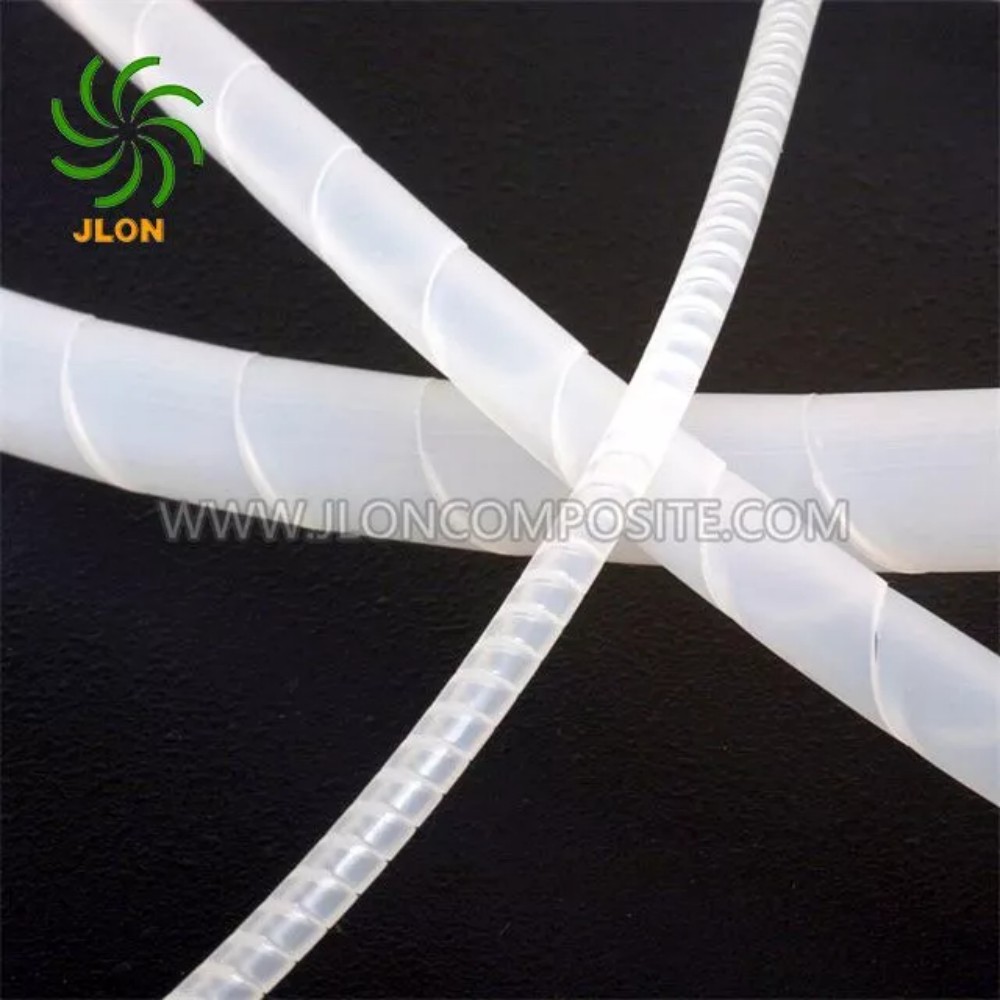
JLON Spiral Tube is specially designed for vacuum infusion and resin transfer molding (RTM/VARTM) processes. Made from high-quality HDPE material, the spiral tube provides a highly efficient resin distribution channel that allows resin to flow rapidly along the infusion edge while evenly dispersing into the laminate through the spiral gaps.
Widely used in fiberglass, carbon fiber, and sandwich composite manufacturing, spiral tubes help manufacturers achieve faster resin impregnation, more uniform laminate quality, and stable production performance.
In vacuum infusion processes such as VARTM, VARI, or vacuum bag molding, maintaining a stable resin flow channel under vacuum pressure is extremely important.
JLON spiral tubes are placed near the resin inlet area or along the mold edge. Once vacuum pressure is applied, resin is pulled through the center of the spiral tube at high speed. The resin then gradually exits through the spiral gaps and enters the flow media or laminate structure.
The main functions include:
· Creating a fast resin transportation channel
· Distributing resin evenly along long infusion edges
· Improving wet-out efficiency of fiberglass or carbon fiber laminates
· Reducing dry spots and incomplete impregnation
· Supporting stable vacuum infusion over large composite parts
Because the spiral structure maintains internal space even under atmospheric pressure, the resin channel remains open throughout the infusion process.
The spiral structure allows resin to flow quickly through the center while continuously feeding resin into the laminate through side openings.
This ensures:
· Faster infusion speed
· More uniform resin distribution
· Better laminate consistency
· Reduced risk of dry areas
For large composite parts such as wind turbine blades, boat hulls, FRP panels, and carbon fiber structures, efficient resin distribution is essential for production quality.
JLON spiral tubes are manufactured from durable HDPE material with optimized wall thickness.
Under vacuum pressure, the tube maintains its structure and does not easily deform or collapse. This guarantees a continuous resin flow path throughout the infusion process.
Stable resin channels help improve process reliability and reduce production risks.
Compared with complex resin distribution systems, spiral tubes offer a very cost-effective solution for vacuum infusion applications.
Benefits include:
· Low material cost
· Easy installation
· Reduced labor complexity
· Suitable for disposable infusion setups
· Compatible with most infusion consumables
This makes spiral tubes widely used in both industrial-scale production and small composite workshops.
JLON spiral tubes are compatible with multiple composite molding technologies, including:
· Vacuum Infusion Process (VIP)
· Vacuum Assisted Resin Transfer Molding (VARTM)
· Resin Infusion under Flexible Tooling (RIFT)
· Light RTM
· Vacuum Bagging
· Marine Composite Manufacturing
· Carbon Fiber Lamination
They can be used together with:
· Flow media
· Vacuum bagging film
· Peel ply
· Infusion mesh
· Resin traps
· Silicone connectors
In wind turbine blade manufacturing, long-distance resin infusion requires stable and efficient resin distribution systems.
Spiral tubes are commonly used along blade edges and resin inlet lines to ensure smooth resin transfer across large composite structures.
Boat hulls, decks, and marine sandwich panels often use vacuum infusion technology to achieve lightweight and high-strength structures.
JLON spiral tubes help maintain uniform resin flow during infusion of fiberglass and carbon fiber marine components.
Automotive lightweighting increasingly relies on carbon fiber and fiberglass composite parts manufactured through vacuum infusion or RTM processes.
Spiral tubes help improve production efficiency and laminate quality in automotive composite applications.
FRP panels, pipes, tanks, and industrial composite structures require consistent resin impregnation.
Using spiral tubes improves infusion uniformity while reducing production defects.
High-performance carbon fiber parts demand accurate resin control.
Spiral tubes support smooth resin feeding and help achieve better fiber wet-out and improved mechanical properties.
JLON offers various spiral tube sizes to meet different infusion requirements.
ID*OD (mm) | Thickness | Working Temperature |
8 × 10 | 1 mm | 120°C |
10 × 12 | 1 mm | 120°C |
12 × 14 | 1 mm | 120°C |
16 × 19 | 1.5 mm | 120°C |
19 × 23 | 2 mm | 120°C |
Custom diameter, pitch, and wall thickness are available upon request.
JLON focuses on high-performance composite materials and vacuum infusion consumables for global composite manufacturers.
Our spiral tubes provide:
· Stable quality
· Strong vacuum resistance
· Excellent resin flow performance
· Multiple size options
· Reliable supply capability
· Competitive pricing
· Technical support for infusion processes
With extensive experience in composite manufacturing applications, JLON supplies products widely used in wind energy, marine, transportation, construction, and industrial composite industries.

Choosing the correct spiral tube depends on several factors:
Large parts may require larger diameter spiral tubes to maintain sufficient resin flow rate.
Higher viscosity resin systems may require larger internal diameters for smoother flow.
Complex molds may need customized spiral layouts for balanced infusion.
Stronger wall thickness provides better anti-collapse performance in demanding applications.
JLON technical team can assist customers in selecting the most suitable spiral tube specifications for different composite manufacturing processes.

Spiral tubes play an essential role in modern vacuum infusion and composite manufacturing processes. By creating a stable and efficient resin distribution channel, they improve infusion speed, laminate quality, and production consistency.
JLON HDPE spiral tubes combine excellent flow performance, strong structural stability, and cost efficiency, making them an ideal solution for fiberglass, carbon fiber, marine, wind energy, automotive, and industrial composite applications.
For more information about JLON Spiral Tube specifications, customization options, and vacuum infusion solutions, please contact our technical team.


