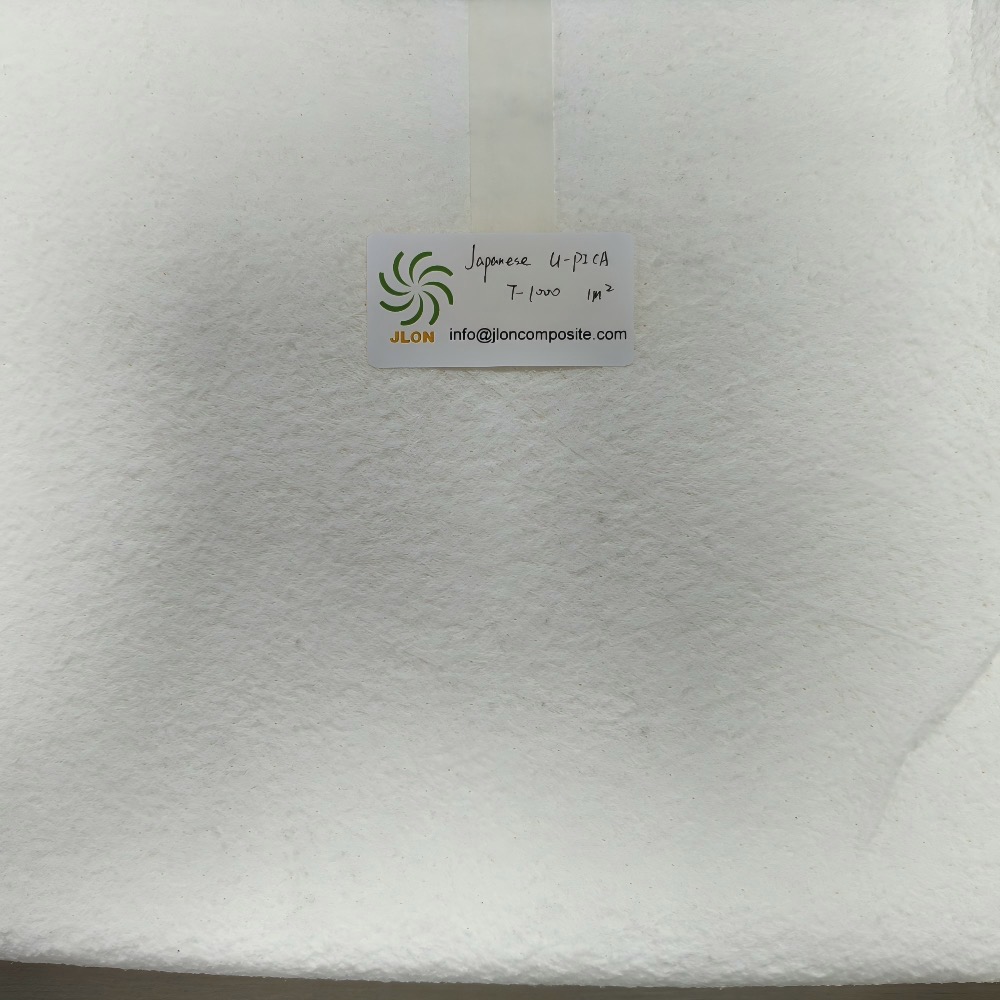
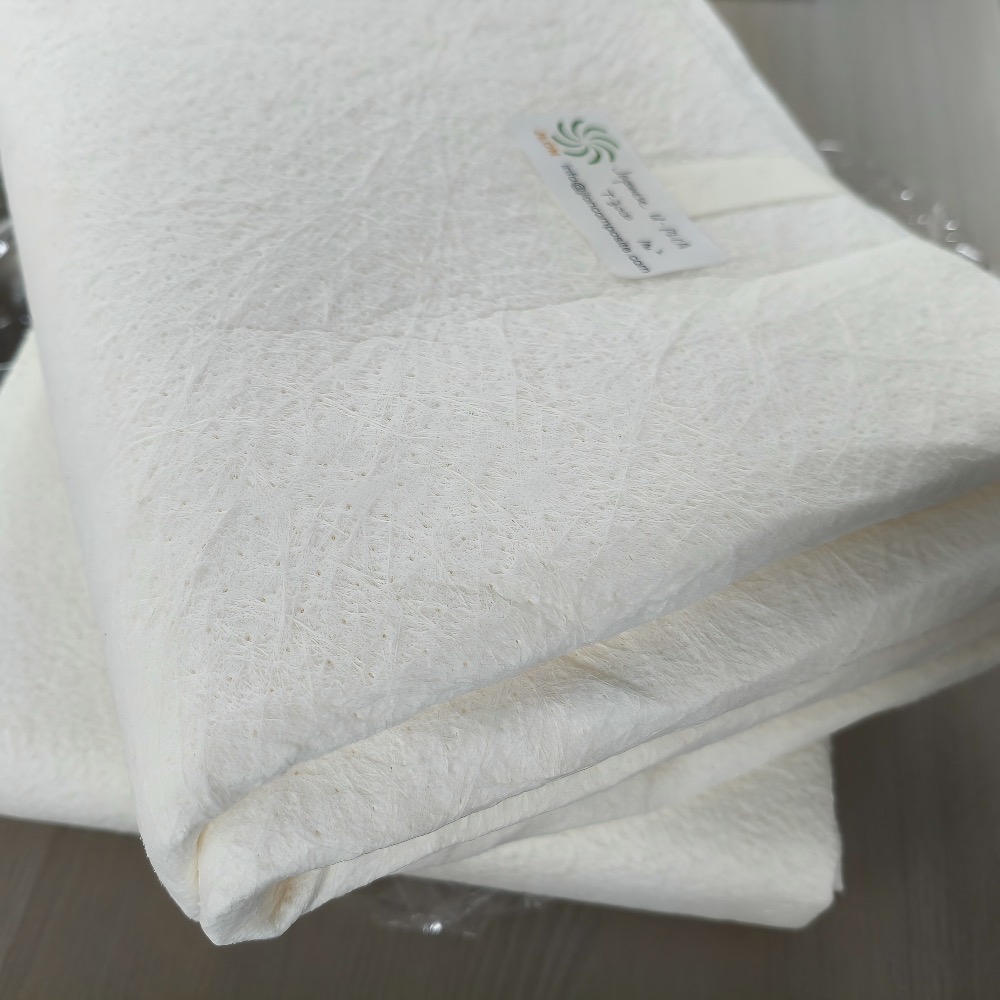
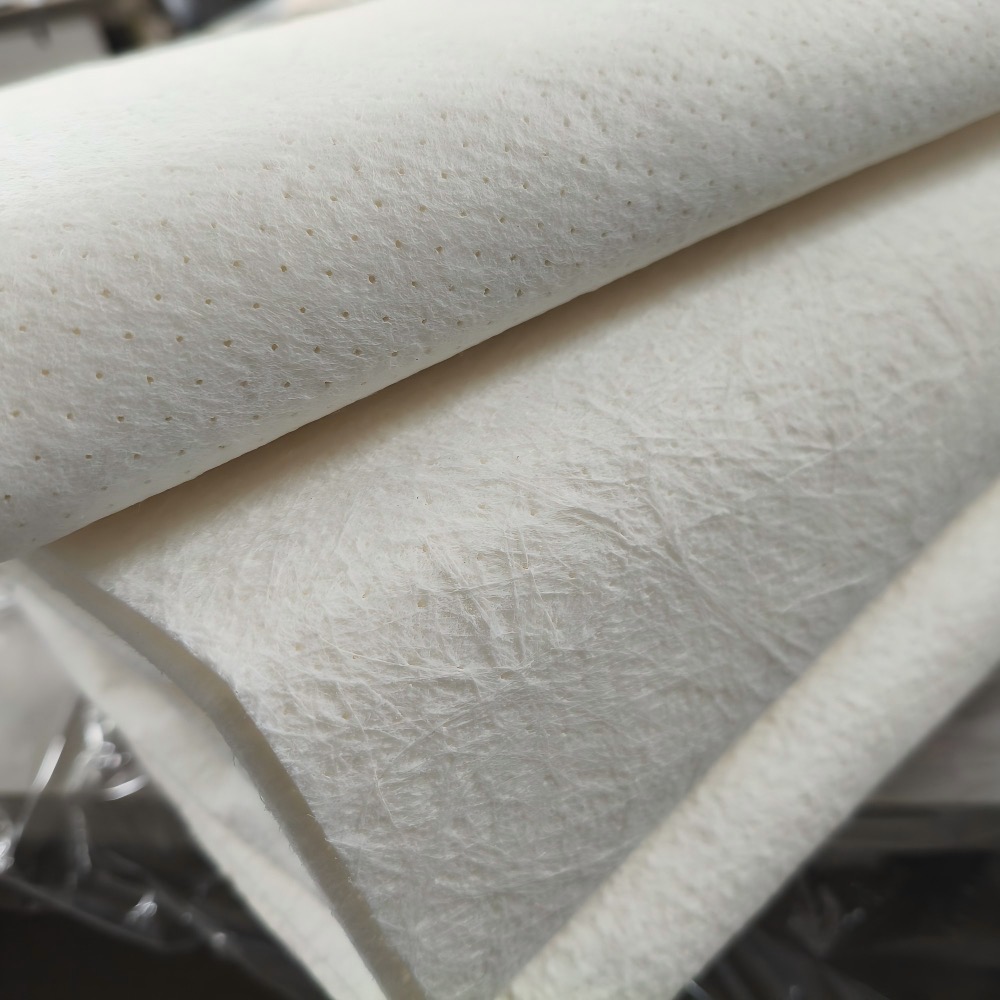
Core mat is a flexible, resin-absorbing intermediate material used in fibre-reinforced plastic laminates.
It generally consists of a lightweight nonwoven carrier containing microspheres. During hand lay-up, the material is impregnated with resin and forms a controlled, low-density intermediate layer between fibreglass reinforcement layers.
Core mat is mainly used to:
◆ Build laminate thickness more efficiently.
◆ Reduce the weight of thick FRP components.
◆ Reduce the number of conventional fibreglass layers required.
◆ Improve the bending stiffness of the finished component.
◆ Reduce fibreglass print-through on the visible surface.
◆ Improve the surface appearance of moulded components.
◆ Simplify the production of curved FRP parts.
Core mat is not a primary structural reinforcement. It does not replace chopped strand mat, woven roving, multiaxial fabric or other load-carrying fibreglass reinforcement.
This product range is specifically intended for open-mould FRP processing, including:
◆ Hand lay-up.
◆ Spray-up.
◆ Contact moulding.
◆ Other open-mould laminate production processes.
Its flexible structure allows the material to follow curved mould surfaces more easily than rigid sheet core materials.
A typical laminate structure may consist of:
Gelcoat → skin laminate → fibreglass reinforcement → core mat → fibreglass reinforcement
The exact laminate structure should be determined according to the required thickness, mechanical performance, surface quality and production method.
This product is not a resin-flow core for vacuum infusion. For vacuum infusion, VARTM or RTM production, please see our separate Core mat for infusion and RTM processing page.
A single layer of core mat can provide approximately 1.5–5 mm of controlled wet laminate thickness.
This allows FRP manufacturers to reach the required laminate thickness with fewer conventional fibreglass layers.
The microsphere-containing structure produces a lower-density intermediate layer than a solid glass-reinforced laminate of comparable thickness.
Actual weight reduction depends on the selected grade, resin content and complete laminate design.
Increasing the thickness of an FRP laminate can improve its bending stiffness without adding the same weight as multiple solid fibreglass layers.
The final mechanical performance depends on the fibreglass reinforcement, resin system, core mat thickness and processing quality.
Core mat can help reduce the transfer of fibreglass patterns through the laminate to the visible surface.
This makes it useful for moulded components where surface appearance is important.
The material is flexible and easy to cut. It can follow many curved mould surfaces without the cutting, grooving or thermoforming normally required for rigid foam sheets.
Suitable core mat grades maintain a relatively stable thickness after resin impregnation, supporting more consistent laminate production.
Core mat can reduce the number of reinforcement layers required to achieve the target laminate thickness, simplifying manual lay-up work.
JLON supplies selected core mat products for hand lay-up and spray-up applications, including U-PICA Mat T Series and MATLINE flexible core materials.
Available brands, grades, roll dimensions and resin compatibility should be confirmed before ordering.
Marine: hulls, decks and structures of boats and yachts
Transportation: parts and panels of cars, trailers, trucks and RV’s
Mass transit: interior and exterior of trains, light rail and buses Leisure: kayaks, surfboards, pools and tubs

Industrial: cladding panels, fans, containers and tanks
| Item | Unit | T-1000 | T-2000 | T-3000 | T-4000 | T-5000 |
| Tickness dry | mm | 1.6 | 2.1 | 3.1 | 4.1 | 5.1 |
| Wet | mm | 1.5 | 2.0 | 3.0 | 4.0 | 5.0 |
| Weight | g/m² | 60 | 90 | 135 | 160 | 200 |
| Apparent density | g/cm³ | 0.040 | 0.045 | 0.045 | 0.040 | 0.040 |
| Resin absorption | vo1.% | 55 | 60 | 55 | 55 | 55 |
| Width | mm | 1,000 | 1,000 | 1,000 | 1,000 | 1,000 |
| Roll length | m | 50 | 50 | 50 | 50 | 25 |
| Roll weight | kg | app.4 | app.5 | app.7 | app.8 | app.10 |
| Roll diameter | cm | 33 | 40 | 48 | 55 | 60 |
| Roll volume | m³ | 0.08 | 0.12 | 0.18 | 0.25 | 0.28 |
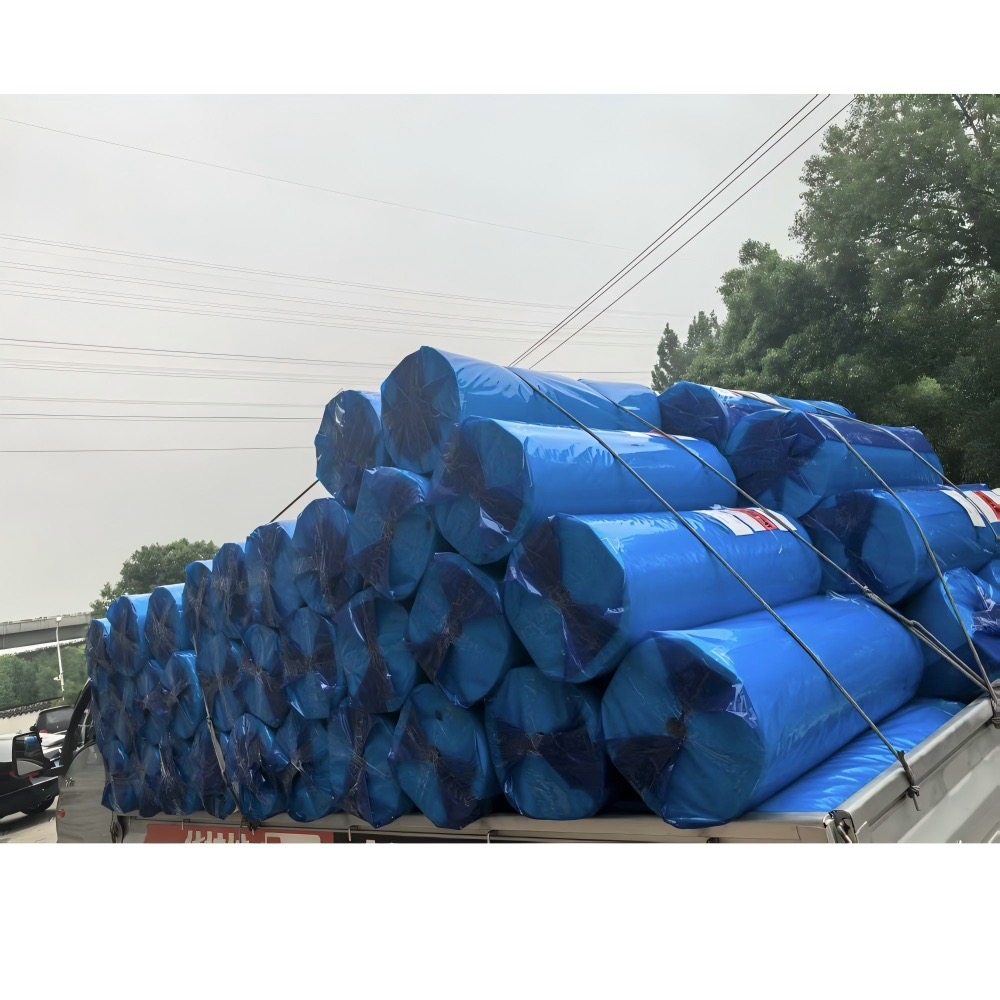
| Packaging | - | - | - | - | - | - |
| Type | Grade | Weight(gsm) | Thickness(mm) | performance |
| Matline+ | Matline+101N | 52 | 1,4 | |
| Matline+201N | 74 | 2 | ||
| Matline+301N | 110 | 3 | ||
| Matline+401N | 140 | 4 | ||
| Matline+501N | 170 | 5 |
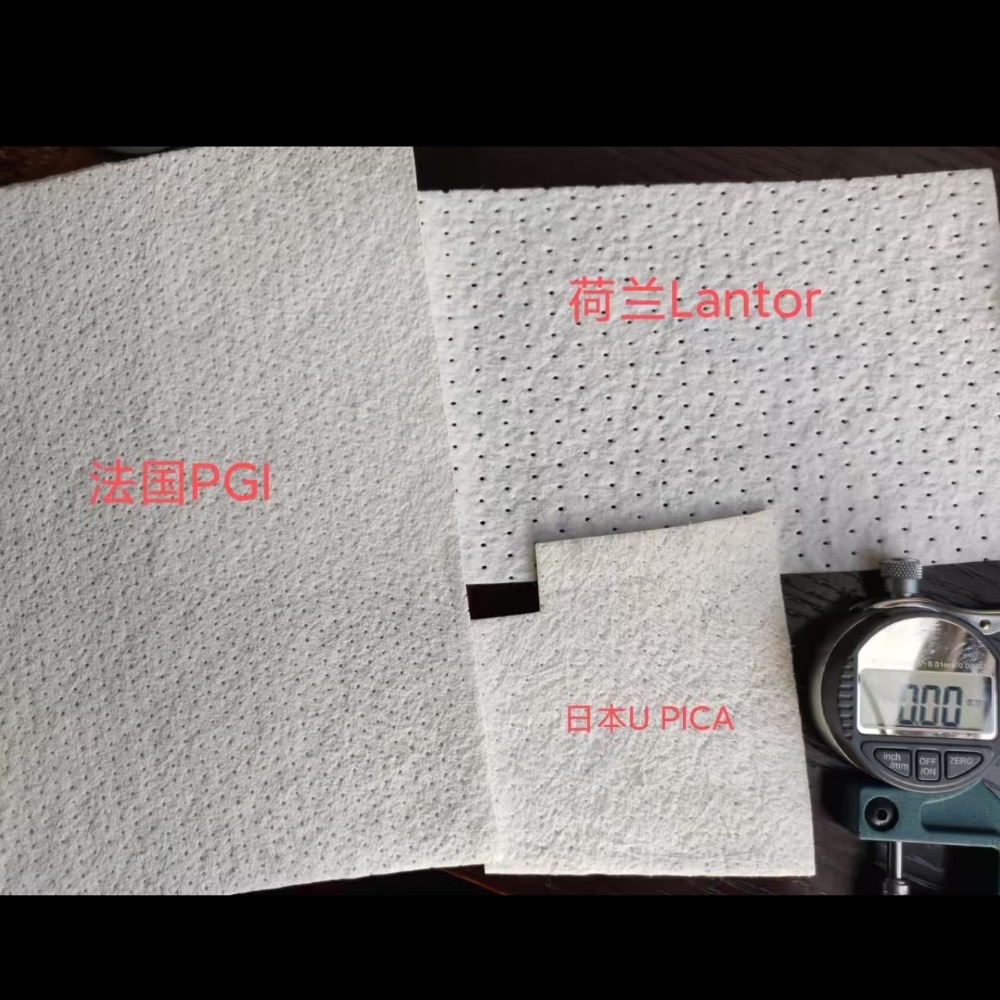
Technical Data sheet of core mat
 MATLINE+101N-2 core mat technical data sheet.pdf
MATLINE+201N-3 core mat technical data sheet.pdf
MATLINE+301N core mat technical data sheet.pdf
U-PICA core mat technical data sheet.pdf
This thickness range is generally selected for:
◆ Print-through control.
◆ Thin laminate bulking.
◆ Components with relatively tight curves.
◆ Lightweight interior parts.
◆ Decorative moulded components.
This thickness is generally selected for:
◆ General-purpose laminate bulking.
◆ Marine interior panels.
◆ Automotive panels.
◆ Sanitary products.
◆ Industrial covers.
This thickness range is generally selected for:
◆ Faster thickness build-up.
◆ Larger moulded panels.
◆ Components requiring greater bending stiffness.
◆ Relatively flat or gently curved parts.
A thicker core mat does not automatically make an FRP component structurally stronger. The type, weight and orientation of the fibreglass reinforcement must still be selected according to the required load.
Cut the core mat to the required shape before mixing or applying the resin.
Dry-fit the material on the mould when the component contains curves, corners or local details.
Apply the gelcoat and allow it to reach the required curing condition.
Apply a suitable surface veil, chopped strand mat or other skin reinforcement according to the production procedure.
Core mat should not normally be positioned directly against the gelcoat.
Place the required fibreglass reinforcement and impregnate it fully with resin.
Use a suitable roller to remove trapped air before positioning the core mat.
Apply sufficient resin to the underlying laminate and place the pre-cut core mat in position.
Make sure the core mat is correctly aligned and lies flat against the underlying laminate.
Apply resin evenly across the core mat and allow sufficient time for complete wet-out.
Resin demand varies according to the selected product, thickness, resin viscosity and processing temperature.
Use a suitable laminating roller or bubble roller to remove trapped air and ensure close contact with the underlying laminate.
Do not apply excessive pressure that could distort the laminate or displace the core mat.
Confirm complete wet-out and consolidation around corners, butt joints, overlaps and local details.
Avoid large overlaps unless they are required by the laminate design, as overlaps can create local thickness variations.
Apply the specified outer fibreglass reinforcement.
Make sure the core mat remains fully enclosed between the reinforcement layers.
Allow the complete laminate to cure according to the resin supplier’s recommended time and temperature.
Trial production is recommended before mass production, especially when changing the core mat grade, resin system or laminate thickness.
Depending on the selected product and binder system, core mat may be suitable for use with:
◆ Unsaturated polyester resin.
◆ Vinyl ester resin.
◆ Epoxy resin.
◆ Phenolic resin.
Compatibility must be confirmed for the exact product grade.
Some binder systems are specifically designed for styrene-containing polyester and vinyl ester resins. Their wet-out and handling behaviour may be different when used with epoxy or phenolic resin.
Please provide the resin type when requesting a product recommendation.
Store the core mat under the following conditions:
◆ Keep the material in its original sealed packaging.
◆ Store it in a clean and dry indoor area.
◆ Keep it away from direct sunlight.
◆ Protect it from water and excessive humidity.
◆ Keep it away from excessive heat.
◆ Store the rolls in a position that prevents deformation.
◆ Protect the material from dust, oil and other contamination.
If the material has been stored in a cold environment, allow it to reach the processing-area temperature before opening the packaging.
Choose the product on this page when:
◆ The component is produced by hand lay-up or spray-up.
◆ Resin is applied manually.
◆ The main requirements are thickness build-up, weight reduction and print control.
◆ In-plane resin-flow channels are not required.
Choose a dedicated infusion core mat when:
◆ The component is produced by vacuum infusion, VARTM or RTM.
◆ The core must assist in-plane resin flow.
◆ A patterned resin-flow structure is required.
◆ Infusion speed and permeability are important selection criteria.
For closed-mould production, please see:
Core mat for infusion and RTM processing
https://www.jloncomposite.com/core-mat-for-infusion-and-rtm-processing.html
JLON can supply different core mat grades and thicknesses for hand lay-up and spray-up production.
We help customers compare thickness, resin compatibility, component geometry and surface requirements before selecting a product.
In addition to core mat, JLON supplies:
◆ Chopped strand mat.
◆ Woven roving.
◆ Multiaxial fibreglass fabrics.
◆ Fibreglass surface veils.
◆ Polyester and vinyl ester resins.
◆ FRP tools and auxiliary materials.
This allows customers to source multiple materials required for open-mould FRP production from one supplier.
JLON supports international customers with product selection, technical documentation, export packaging, sample coordination and shipping arrangements.
Please provide the following information when requesting a quotation:
◆ Required core mat thickness.
◆ Required roll width and roll length.
◆ Estimated order quantity.
◆ Resin type.
◆ Hand lay-up or spray-up process.
◆ Finished-product application.
◆ Component shape and surface requirements.
◆ Destination country or port.
◆ Required technical documents or test reports.
Yes. The core mat products on this page are primarily intended for hand lay-up, spray-up and other open-mould FRP processes.
No.
Chopped strand mat is a glass-fibre reinforcement. Core mat is primarily used as a lightweight laminate bulker and print control layer.
The two materials perform different functions and are frequently used together in the same laminate.
No.
Core mat should normally be positioned between fibreglass reinforcement layers. It does not replace the structural reinforcement required by the finished component.
The products on this page are primarily designed for manual open-mould processing.
For vacuum infusion or RTM, use a dedicated patterned infusion core that supports in-plane resin flow.
A suitable skin laminate is normally placed between the gelcoat and core mat.
The skin laminate helps protect the gelcoat, improve the visible surface and reduce the risk of local print-through or surface defects.
Resin absorption depends on the product grade and thickness.
For the U-PICA Mat T Series shown on this page, the typical resin volume is approximately 55–60%, depending on the grade.
Final resin requirements should be confirmed using the technical datasheet and a production trial.
Yes.
Flexible core mat has good conformability and can follow many curved mould surfaces.
For sharp corners or complex shapes, dry fitting and a trial laminate are recommended before mass production.
Core mat increases the thickness of the laminate, which can improve bending stiffness.
However, final mechanical performance depends on the complete laminate structure, including the fibreglass reinforcement, resin system, core mat thickness and processing quality.
It may be used in selected laminate areas, but it should not automatically be treated as a replacement for structural PVC or PET foam.
The complete hull laminate must be designed according to the expected loads, required mechanical properties and applicable marine standards.
Please provide the following information:
◆ Production process.
◆ Resin type.
◆ Required wet thickness.
◆ Finished-product application.
◆ Component shape.
◆ Surface-quality requirements.
◆ Estimated order quantity.
JLON will recommend a suitable product based on the information provided.